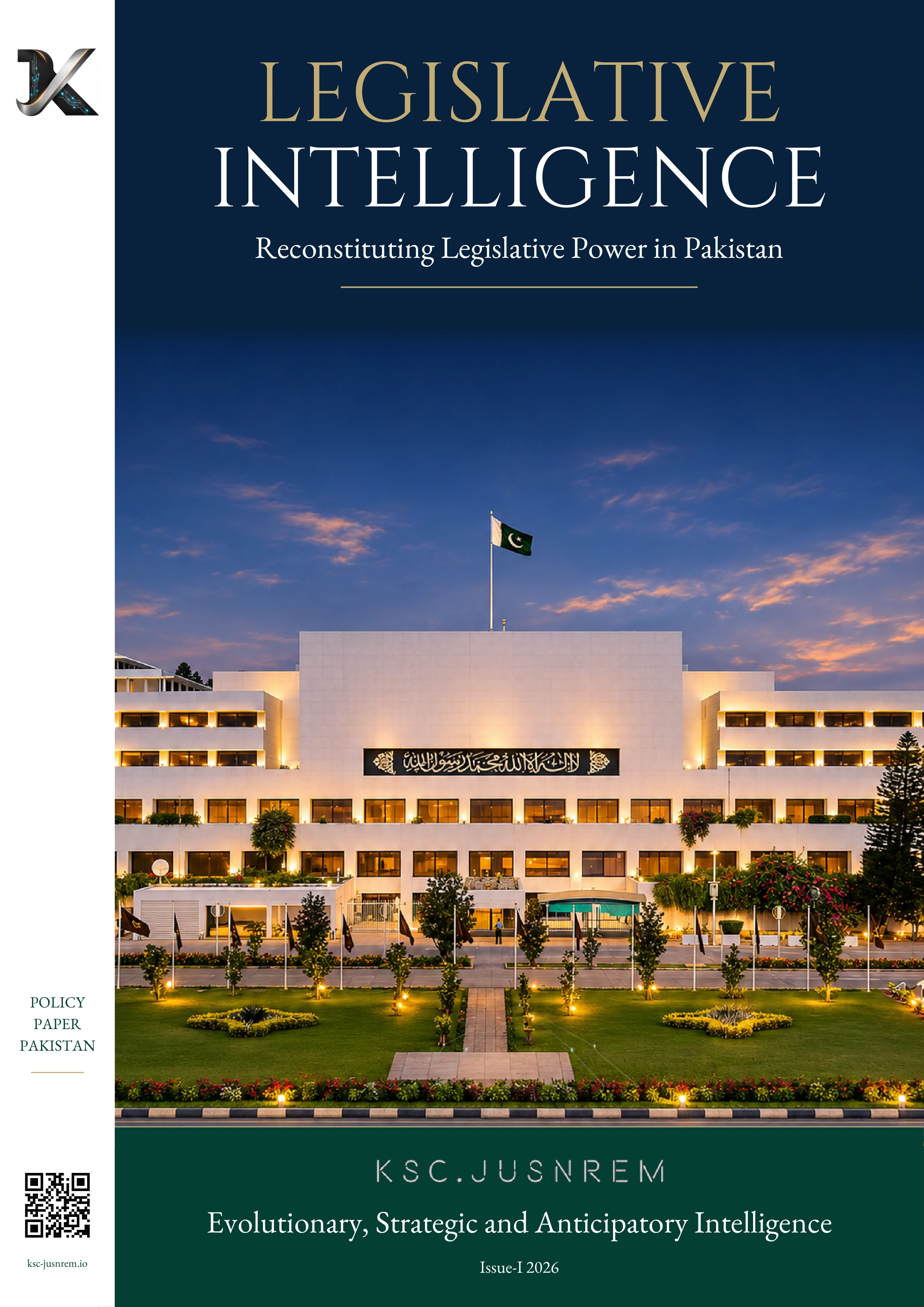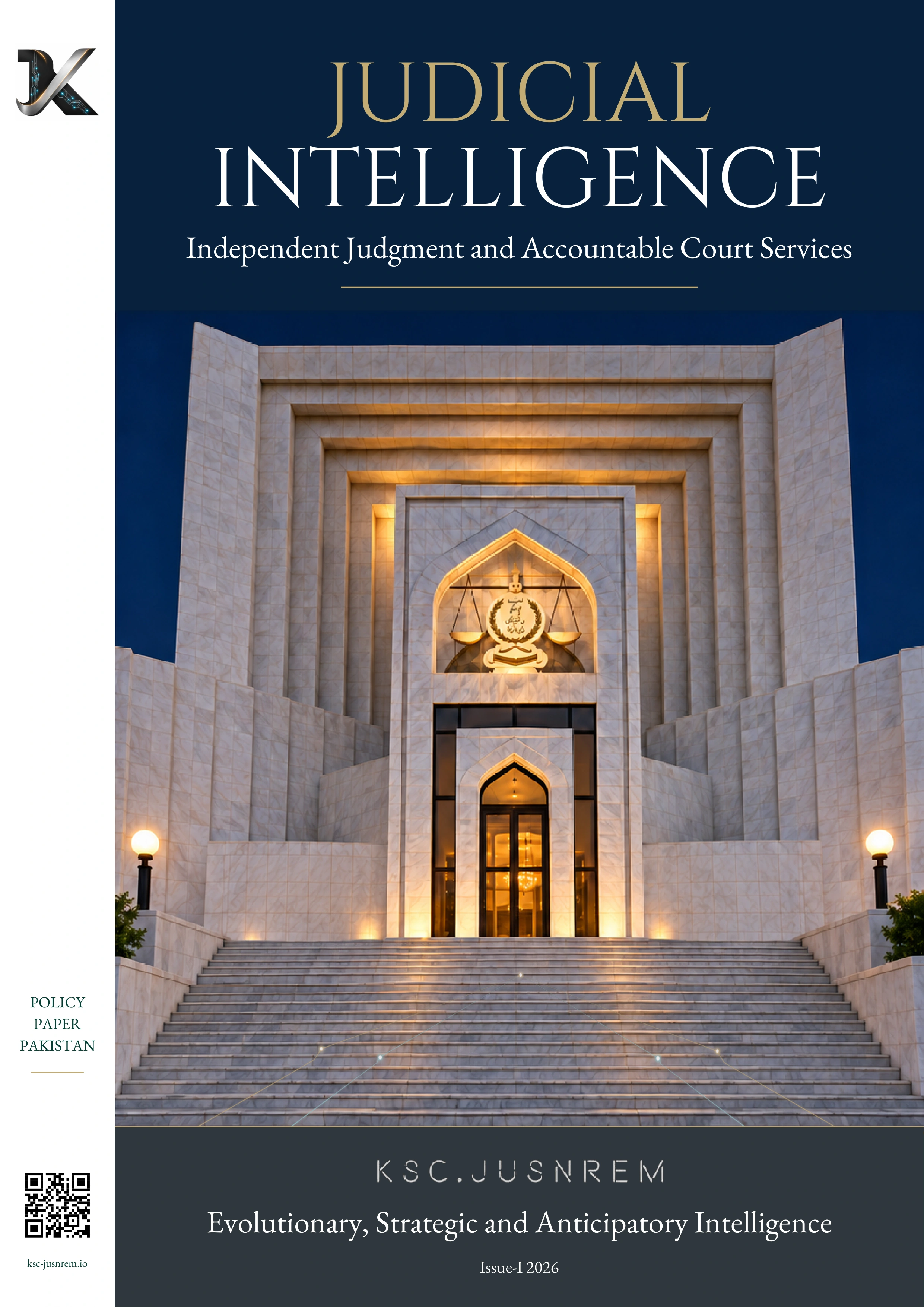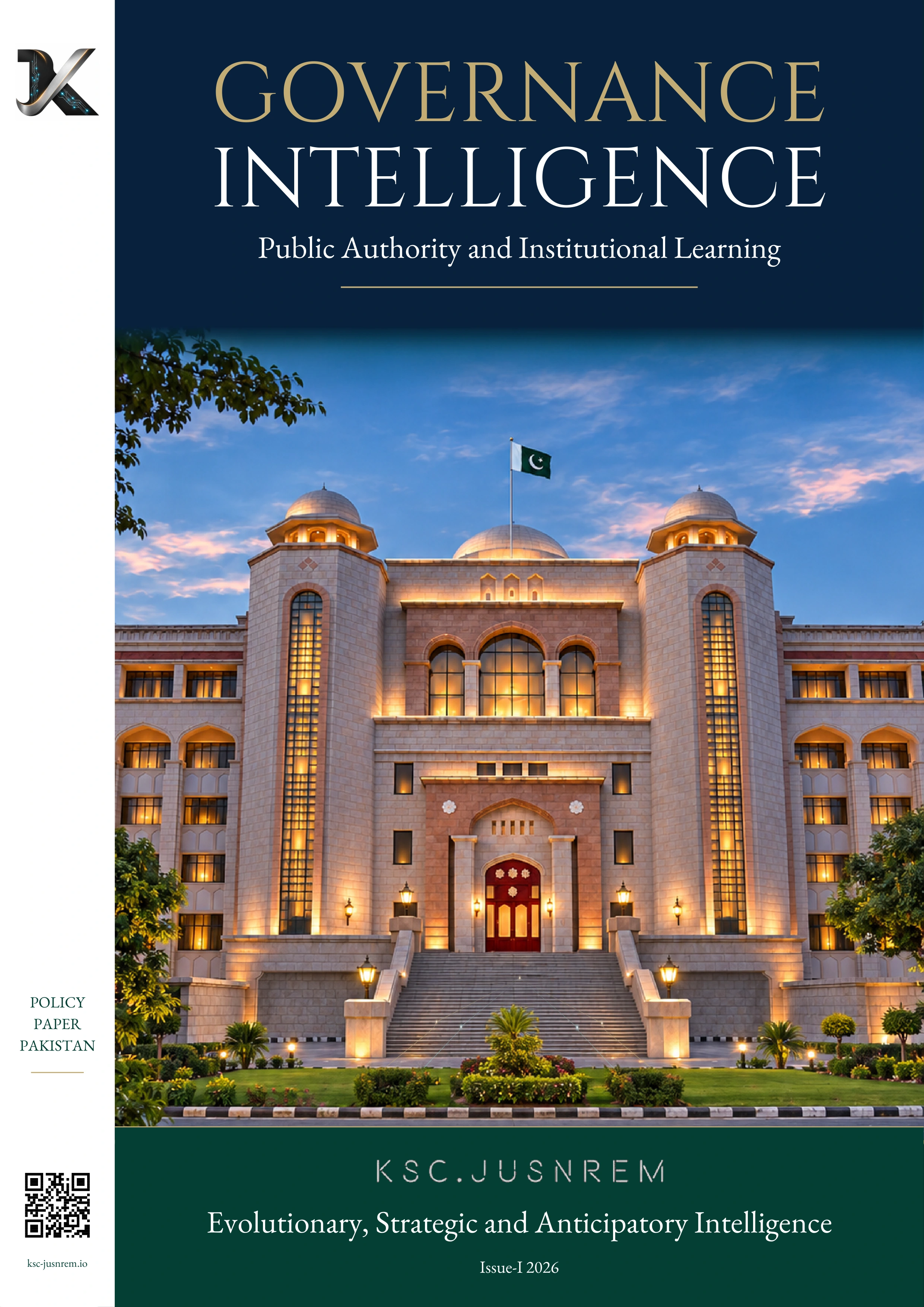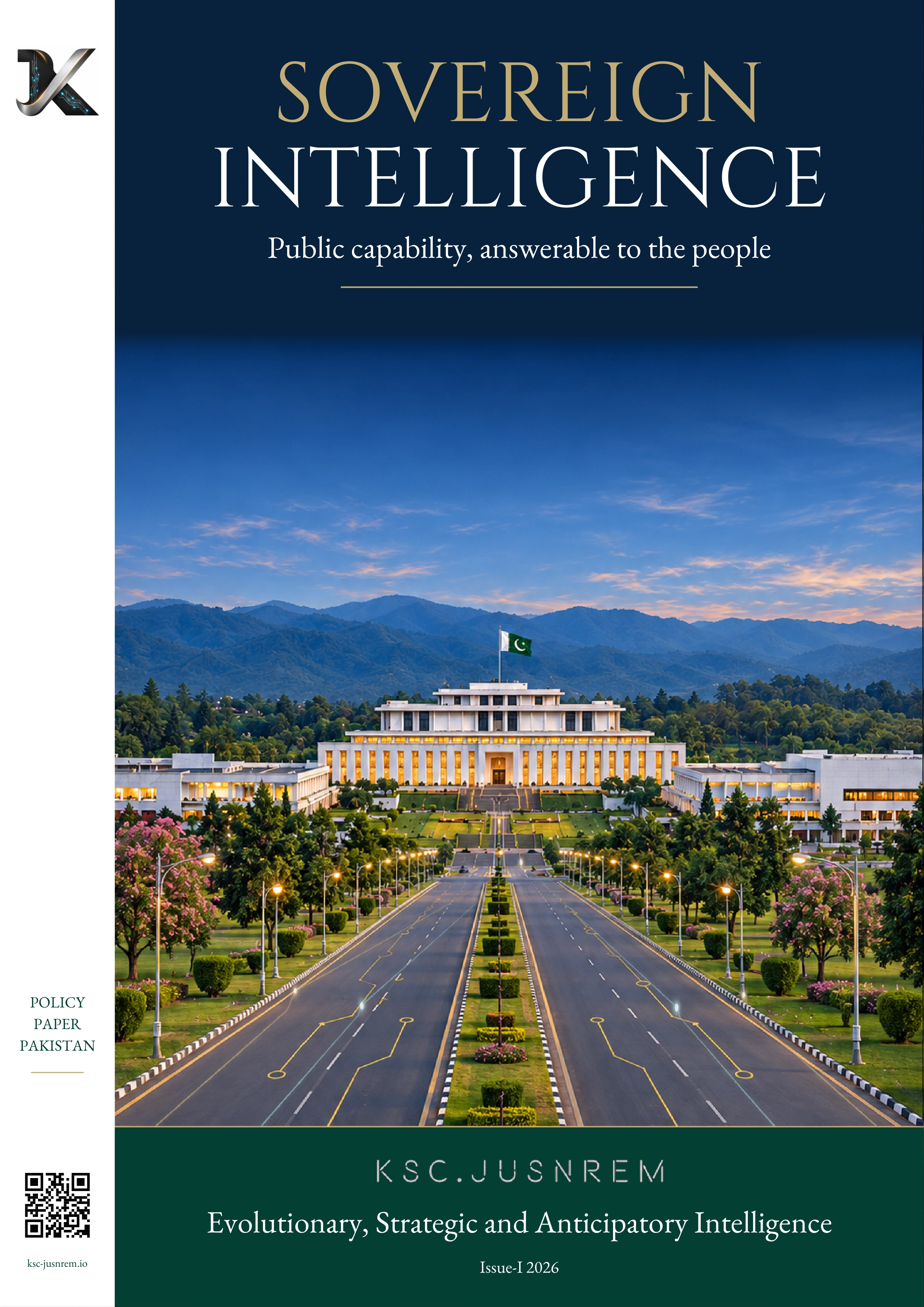
Current policy papers · Pre-release review

Read, review and contribute.

Source checks remain incomplete. Designed cover illustrations imply no institutional endorsement. Read the full call and express interest.

KSC.JUSNREM Research & Publications

Research made public, citable and open to correction.

A separate home for papers, legal essays, articles, research developments, frameworks, reports and other publications. Every record states what the work is, who is responsible for it and whether it is published, provisional or still part of the research agenda.

Call for interest · 1 October 2026

Code, Law and Capital

The Global Edition and the Pakistan Library Edition, published as calls for interest with their detailed contents: every chapter’s guiding question, abstract, key principles and leading authorities, the first reviewer-circulation dates, and both documents to download.

Explore the two editions
05Public records
05Open to challenge
01Programmes in development
06Research areas

Publication library

Read the work by type and publication status.

“Published” means released as a citable public work. “Public draft” means readers may examine and challenge it, but final review by the Author remains pending.

Showing 5 of 5 records

Legal essayPUBLIC DRAFT

30 July 2026 · Version 0.1

When Power Becomes Architecture — Authority, Responsibility and Remedy

A doctrinal essay explaining why future governance must follow authority, responsibility, sovereignty, rights and remedy through the complete architecture of a consequential decision.

  • Future governance
  • Authority
  • Remedy
Author / steward
Khurram Chughtai · KSC.JUSNREM
Publication status
PUBLIC DRAFT
Citation and record

KSC.JUSNREM. “When Power Becomes Architecture — Authority, Responsibility and Remedy.” Editorial draft, version 0.1, 30 July 2026.

Sources: Eight-chapter doctrinal essay and public decision-trace instrument. A source register and Founder review remain required before ratification.

Correction history: Public draft; Founder review, source review and final attribution remain pending before institutional ratification.

Open the work
Proposition registerPUBLIC DRAFT

30 July 2026 · Version 0.1

JUS.automica — Proposition Register

A versioned register of developing jurisprudential propositions concerning evolving intelligence, authority, remedies, anticipation and constitutional infrastructure.

  • Jurisprudence
  • Evolving intelligence
Author / steward
Khurram Chughtai · KSC.JUSNREM
Publication status
PUBLIC DRAFT
Citation and record

Chughtai, Khurram. “JUS.automica — Proposition Register.” KSC.JUSNREM, version 0.1, 30 July 2026.

Sources: Public propositions on this page. Draft canons and wider fields remain expressly provisional.

Correction history: Initial public version; no correction recorded.
Open the work
Vision statementPUBLIC DRAFT

30 July 2026 · Version 0.1

The Future Must Remain Governable — KSC.JUSNREM Vision

A public statement explaining why legal thought should enter technological and institutional change while meaningful choices remain open.

  • Present responsibility
  • Future leadership
Author / steward
Khurram Chughtai · KSC.JUSNREM
Publication status
PUBLIC DRAFT
Citation and record

Chughtai, Khurram. “The Future Must Remain Governable — KSC.JUSNREM Vision.” KSC.JUSNREM, version 0.1, 30 July 2026.

Sources: Concise public vision statement and six constitutional commitments. No technological forecast or institutional development timeline is asserted.

Correction history: Initial public version; no correction recorded.
Open the work
Institutional essayPUBLIC DRAFT

30 July 2026 · Version 0.1

One Governing Purpose — The Institutional Logic of the KSC.JUSNREM Ecosystem

A relationship essay explaining KSC.JUSNREM as the umbrella, JUS.automica as the jurisprudential spine, Strategic and Anticipatory Legal Intelligence as governing capacities, and the wider ecosystem as disciplined institutional expressions.

  • Institutional architecture
  • Ecosystem
Author / steward
Khurram Chughtai · KSC.JUSNREM
Publication status
PUBLIC DRAFT
Citation and record

KSC.JUSNREM. “One Governing Purpose — The Institutional Logic of the KSC.JUSNREM Ecosystem.” Editorial draft, version 0.1, 30 July 2026.

Sources: Nine-chapter institutional relationship essay grounded in the working ecosystem constitution, canonical entity register and website-federation rules.

Correction history: Public draft; Founder review and final attribution remain pending before institutional ratification.

Open the work

Programmes in development

Announced before publication, so the record can hold them to account

These works are under active development. They are not yet public drafts; each enters the publication library when its first citable version is released.

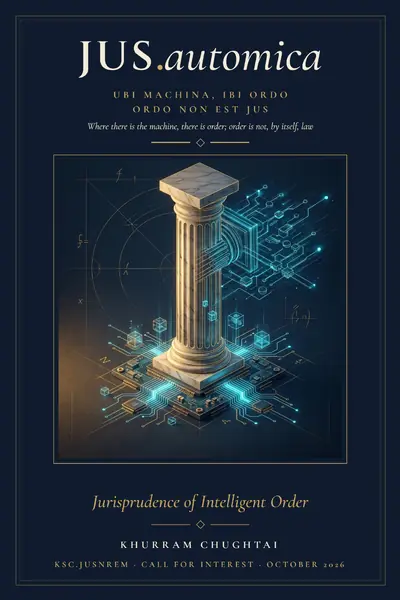
Cover of JUS.automica, Jurisprudence of Intelligent Order, by Khurram Chughtai: a marble column rising from a circuit board beneath the maxim Ubi machina, ibi ordo. Ordo non est jus.
Jurisprudential programme · Part I in reading draft

JUS.automica

Jurisprudence of the Intelligent Order

Wherever there is a machine there is an order, but an order is not, by that fact, law: the programme asks under what conditions evolving intelligence could take part in generating, recognising, revising, interpreting or enforcing constitutive rules, and what would make the resulting exercise of legal power valid, authorised, rights-bound, attributable, reviewable and open to effective remedy.

Part I, Foundations, From Classical Jurisprudence to Code-Based Truth, sets out the common jurisprudence on which the applied Parts depend. It stands as a reading draft which the Author has not yet read or adopted, in which no citation is yet cleared and every doctrine named is proposed and not ratified.

Part I, Foundations: twenty-three chapters in five divisions, The New Condition, Intellectual Genealogy, Authority and Rights, Definition and Doctrines, and The Foundational Charter.

Enter the JUS.automica programme
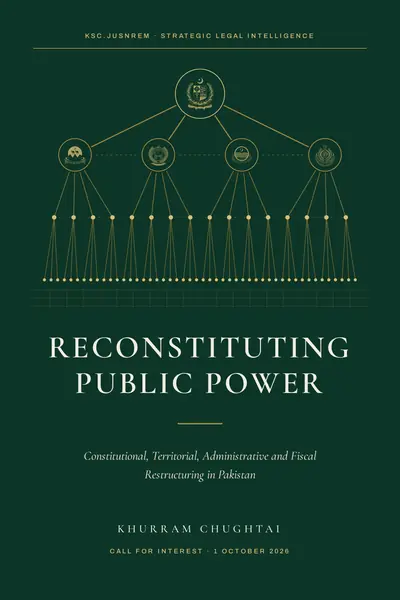
Cover of Reconstituting Public Power, by Khurram Chughtai: the federation drawn as a tree from the State emblem through the four provinces to the districts, on deep green.
Constitutional reform architecture · Draft for consultation

Reconstituting Public Power

Constitutional, Territorial, Administrative and Fiscal Restructuring in Pakistan

A constitutional treatise on Pakistan which asks why a constitutional order that allocates authority so clearly on paper so often fails to settle who actually decides, with what means and under whose correction, and which proposes changes to constitutional text, legislation, rules and administrative practice that would close that gap without rupturing the constitutional order.

Its argument turns on one distinction: moving authority from one body to another is reallocation, while changing the terms on which personnel, finance, information, procedure, coercive capacity and technology are held is reconstitution, and Pakistan has reallocated often and reconstituted rarely.

The call for interest of 1 October 2026, revised on 2 October, releases the front matter and the detailed contents only. The chapter text is not released, the work has not been peer-reviewed and its citations remain under verification.

Three volumes, twelve Parts and sixty-four chapters, with a Legislative and Evidence Companion of ten model instruments.

Register interest by email
Codex & Treatise on Pakistan's fiscal law and policy · In development

The Constitution of Fiscal Order

The law of public finance in Pakistan

A structured Codex and a Treatise examining the constitutional and statutory architecture of public finance and taxation in Pakistan, from fiscal legality and federal finance to the charge and machinery of taxation and the duties fiscal power owes to those it binds. Detailed treatise text is not published openly; access may be requested through correspondence.

A call for interest, issued on 1 October 2026 as a consultation prospectus, invites readers, practitioners, officials, auditors, taxpayers and research bodies to examine how public money is lawfully raised, held, allocated, spent and accounted for in Pakistan, and to improve the work through evidence and criticism before its manuscripts are finalised. No chapter text is released and no proposition is yet cleared for citation.

Three Books, Foundations, Revenue and Management, in fourteen volumes: fourteen pillars.

Register interest by email

Research agenda

The questions currently organising the inquiry.

An agenda identifies a direction of research. It is not presented as a completed publication or an institutional conclusion.

01

Authority and consequential decisions

How lawful mandate, policy, data, computation and administrative practice combine to produce decisions that affect people.

02

Responsibility across systems

How responsibility can remain attributable when institutions, vendors, technical systems and human officials share a decision chain.

03

Rights, reasons and effective remedy

What explanation, review and correction require when the cause of harm is distributed through a decision architecture.

04

Sovereignty and digital infrastructure

Which legal and operational capacities public institutions must retain when essential functions depend on external infrastructure.

05

Courts, evidence and dispute systems

How courts should examine technical records, computational evidence and new imbalances of institutional knowledge.

06

Anticipatory law and institutional preparedness

How legal thinking can enter procurement, design and governance while meaningful choices remain open.

Examine the full research fieldbook

What belongs here

One library, several forms of serious public work.

The form follows the question. A short case note and a long research paper can belong to the same intellectual record without being mistaken for the same kind of work.

01

Research papers

Sustained, sourced analysis of a defined legal or institutional question.

02

Legal essays

Signed arguments that develop jurisprudential or governance propositions.

03

Articles and case notes

Focused analysis of cases, legislation, institutions and significant developments.

04

Briefings and reports

Concise material prepared for public, institutional or policy use.

05

Frameworks and tools

Inspectable methods, decision instruments, registers and governance designs.

06

Books and other publications

Long-form works, chapters, edited collections and selected external publications.

Publication standard

Each record should answer four questions.

  1. 01

    What kind of work is this?

  2. 02

    Who wrote, reviewed or stewarded it?

  3. 03

    What is its present publication status?

  4. 04

    How can it be cited, challenged or corrected?